I completely missed National Poetry Month (April) but in cleaning out my aggregator I came across this lovely lady Bassey Ikpi (H/T WriteBlack):
Which reminded me of this, passed along to me by Littlest Sis a few weeks ago. Embedding is disabled but her name is Zora Howard, she is performing at the Urban Word NYC Teen Poetry Slam and you can also find here here in this short film by Lisa Russell.
To me these are two interesting and different examples of how poetry can speak. Bassey's poem is powerful spoken. But I would have also liked the time and private space to read it on the page, digest it with my eyes, ruminate and return to this line, or sit back and reflect on how that word fits into the entire stanza and the page. Whereas Zora's poem could possibly be read. But then you lose the power of this little dynamo, the energy of her breath, the movement of her body and the physicality of her "bi-racial hair." Just as reading Bassey on the page you could remove her--slight, black, roundly and delightfully pregnant and singular on the stage--from sight.
If read, the audience/reader stops being confronted with Bassey's body and the immediacy of the poem, the black baby boy soon to be born, recedes. Or at least, our assumption of immediacy--because, of course, that poem could be old, that boy could already be born, he could already be grown, that could actually be a daughter, or it could even be a baby suit which would make it a complete farce and the visual becomes just another prop, a part of the performance of the poem.
If spoken, we lose the opportunity to consider Zora's historical anecdotes. She deserves footnotes.
I love both versions--page and stage.
Still, what do we (the audience) gain and lose in each version? Are there poems that work well in both forms regardless? Are there forms that work better for women (of color) than for men? And how should we (the artist) navigate the intricacies of whichever form we choose?
Monday, May 11, 2009
Is Poetry Audiovisual?


Saturday, November 15, 2008
Sunday, November 2, 2008
Monday, July 28, 2008
Do Something Romantic For Yourself
Truly.
Margaret Cho speaks. Posting the quote in full but dart over to Reappropriate for the link to the full article:
I was on this radio show, and the DJ asked me, “What if you woke up tomorrow and you were beautiful? What if you woke up and you were blonde, 5′ 11″, and you weighed 100 pounds?”
Well, I probably wouldn’t get up — because I’d be too weak to stand. In our culture, we don’t see people out there with normal-looking bodies. We should all feel beautiful. If you feel beautiful, you will be more political, more active in trying to stand up for yourself, you’ll be in more control of your life, have more sense of power over what you’re doing.
I started to need to feel more positive about myself after I came to Hollywood. I got criticized a lot for my looks — people thought that I was too fat and that I wasn’t pretty. Also, because I’m different — because I’m not white, I’m Asian, I’m not super skinny. I was anorexic for a time when I was about 24, when I was doing television. I was told by network executives that I had to lose weight. I was forced to. I went on a very rigid diet and became very sick because I wasn’t eating at all.
My mother always had body issues, and I really feel that she passed that on to me. She’d had two kids and couldn’t retain her old body. She handed down this disordered eating to me. She was always on a diet and always exercising, but not getting any joy from it. It was a punishing activity. Before I reached puberty, she was always so in love with my body, and saying, “You’re so thin, you’re so thin, just stay that way.”
My father … one time when I was maybe 9 years old and dancing in ballet — I loved it — he said after a recital, “You’re the fattest ballerina.” It so destroyed me that I never wanted to dance again. He wanted to prepare me for a world that was not going to accept me because I think he experienced so much racism. He’d say, “You’re not pretty. And you’re not going to be pretty.” I absolutely believed him.
I was on this radio show, and the DJ asked me, “What if you woke up tomorrow and you were beautiful? What if you woke up and you were blonde, 5′ 11″, and you weighed 100 pounds?”
Well, I probably wouldn’t get up — because I’d be too weak to stand. In our culture, we don’t see people out there with normal-looking bodies. We should all feel beautiful. If you feel beautiful, you will be more political, more active in trying to stand up for yourself, you’ll be in more control of your life, have more sense of power over what you’re doing.
I started to need to feel more positive about myself after I came to Hollywood. I got criticized a lot for my looks — people thought that I was too fat and that I wasn’t pretty. Also, because I’m different — because I’m not white, I’m Asian, I’m not super skinny. I was anorexic for a time when I was about 24, when I was doing television. I was told by network executives that I had to lose weight. I was forced to. I went on a very rigid diet and became very sick because I wasn’t eating at all.
My mother always had body issues, and I really feel that she passed that on to me. She’d had two kids and couldn’t retain her old body. She handed down this disordered eating to me. She was always on a diet and always exercising, but not getting any joy from it. It was a punishing activity. Before I reached puberty, she was always so in love with my body, and saying, “You’re so thin, you’re so thin, just stay that way.”
My father … one time when I was maybe 9 years old and dancing in ballet — I loved it — he said after a recital, “You’re the fattest ballerina.” It so destroyed me that I never wanted to dance again. He wanted to prepare me for a world that was not going to accept me because I think he experienced so much racism. He’d say, “You’re not pretty. And you’re not going to be pretty.” I absolutely believed him.
Now I feel great and settled in myself and the way I look. It took a long time to get there. You need to look in the mirror and compliment yourself. I have these little rituals of being very fastidious about my skin care and drinking a lot of water, and I see the results. When we care for ourselves, these are acts of love.
Do romantic things for yourself. Over the years, I’ve become a dancer, which is a big part of my life. I do belly dancing and burlesque dancing. Now I’m comfortable enough to do shows naked. This is a huge change from feeling super insecure and freaked out to feeling totally comfortable with myself. It’s about celebrating the body as opposed to trying to banish it.
Saturday, April 26, 2008
Sing a Black Girl's Song: Body Image
For the last few weeks I've been working with fifth and sixth grade girls of African descent making collages, scrapbook pages, and whatever else you can imagine doing with magazines, glue sticks, and some poetry.
The first week or two the girls were pretty creative, but notice anything?


You guessed it. Light skin, long hair, slim to skinny figures. Yes, there are women of color in the last collage. But put in context with the other two (which are representative of the whole) it is both the exception and blatantly unexceptional. At the end of the day, all of the women look very much the same. When I took my girls work home and took a look, the glaring truth was disturbing and painfully obvious. Asked to find "positive" images, and when given no other guidance, they unerringly choose women who looked nothing like them.
But I took the responsibility on myself. After all, it was my mistake to give them mainstream magazines like Lucky and InStyle to choose their images from. So I went on a metaphoric dumpster dive for positive images and I gave them more specific instructions. On a canvas of pre-selected images of women obviously of African descent--with dark skin, kinky hair, and some with a little more bump to their rump, although that last was hard to find even in an Essence--the girls would add positive words from the same magazines, little pictures, and words/phrases from the poem "Phenomenal Woman" by Maya Angelou and "Let it Go" by Keyisha Cole.
I rubber cemented their images on cardstock and in class this week I passed them around.
Initial reaction --> "Uh UH! I don't want that one!"
Now, I let that slide. Normally I do let them choose their own images so it seemed logical that they would cry foul when I gave them what would be their main image. And, accordingly, when I made it clear that this was what they had to work with, most settled in.
But a couple of students were adamant. "I DON'T want that one. I don't want those!"
These were students with the images of the darkest women. One was what I thought was a shadowed image of a long, lanky woman with dark, velvety skin in an ad Johnson's Baby Oil. The other was an editorial page but the featured image was Angie Stone.
So I tried diplomacy. "Well, what's wrong with those images?"
"I don't want them. What about this one?" The one with Angie Stone flipped it over. Hers was one I'd forgotten to glue to cardstock. On the back was an ad with Beyonce Knowles at her tragic mulatta loveliest for American Express. I rolled my eyes inside. Jeez.
"No, not that one. In fact, here." I corrected my mistake, glued her image down, leaving her with Angie's dark eyes smiling at her. "Here you go."
"No!"
Meanwhile, across the table, the student with the Johnson's ad was cutting out a full page Herbal Essences ad prominently featuring an ambiguous Latina. "What are you going to do with that?," I ask. Diplomacy.
"I'm going to cover it," she smiled. And proceeded to place the ad, the entire full page, on top of the darker woman.
No way. Diplomacy, I saw, was going to have to go out the window. Not that I am one to crush creative impulses, but this was getting ridiculous. In actuality, I was beginning to feel a little helpless and frustrated.
I shook my head. "Nope. You have to use the image I gave you. You can add around it if you want."
She glared at me. When I looked up again, she'd cut out some words like "Beautiful" and "Feel Good."
And she'd placed them on top of the dark woman's face and thighs in preparation for gluing them down.
I moved quickly. "Whoa, buddy. Now what are you doing?"
The girl wrinkled her nose. "I'm trying to cover her! She's naked!"
"She's not naked. You can't even see anything. Just that beautiful brown skin." I said it deliberately. And she and her partner jumped right to the bait.
"Uh uh! She's not brown--she's CRISPY!"
"Yeah! She's BLACK!"
I smiled. "Oh yeah? You're right. And that's a Johnson ad, so she's all oiled up and beautiful. Something wrong with that?"
The girls blushed, smiling, shaking their head, shrugging--didn't know what to say. And I was thanking God that at least they didn't immediately respond that, "Yes, there IS something wrong with that." Because I don't know what I would have done.
So I tapped the image, deliberately moving the words out of the way. "She's got beautiful skin, don't you think? You should move the words around it to highlight that. And highlight her face."
Groans. Aww mans. Ahh, c'mons. But they moved the words around so that Beautiful floated (just below the face, dangerously close) gently along the woman's arm and Feel Good was tattooed on her thigh.
Meanwhile, the girl with Angie Stone was busy cutting out Beyonce and placing her beside Angie on her picture.
I watched warily, but decided there was only so much I could do with their creative license. I'd at least succeeded in stopping both of them enacting internalized oppression violence on the women's faces.
I spoke too soon.
One of my more promising students, a serious, creative girl who'd actually taken herself away from the group into the corner to work, came over with a smile. "I'm done!" I smiled back. I'd given her a fashion couture shot of a dark brown woman with braids coiled in a sophisticated coif around her head. I was excited to see what she came up with.
Beautiful. And violent. "This is really great--but why did you write across her face? And put "Rise" across her nose?"
This student had the presence of mind to blush. She shrugged. "I dunno. I messed up."
I was grinding my teeth inside, because I didn't want her to think she messed up! Darn it self-denigrating-youth-of-color!
"No, just think about it for next time. Try to find images that would frame her beautiful face. Especially the contrast with her clothes, how it highlights that lovely brown." Word choice deliberate. But she still looked a little flustered so I pointed out that the strawberries were a nice, clever touch. She went back to her seat smiling.
The rest of class was uneventful, or at least the events ran along similar lines. But by the end I was exhausted. I'd thought by giving them images of black women with no option to skate around them that they would simply transfer the positive from the white/mixed race to the dark. I thought it was an issue of lack of option.
But it was much more complicated than that. From outright erasure to discrete vandalizing, these girls did their best to remove themselves from identification with the images, to deny the beauty and humanity of the photos, and to replace/rewrite/retain the stereotypes of beauty/good/healthy/nice as white/light that they'd been socialized into. And they were prepared to argue with me on the matter! Although, like I said, at least they weren't so bold as to say directly to me, "Kinky hair is ugly and black skin is too."
Man. Kenneth Clark would have a field day.
And I won't lie--I felt personally attacked. Although I know they didn't mean it, here I sit, in solidarity with them, dark brown just like they are dark brown, kinky haired just like they are kinky haired (albeit some with relaxers) and the first image they reach for is lighter skinned, long haired Beyonce or Christina Milian. And, even more frightening, the first image they reject is dark skinned, curly haired Angie Stone. Where then does that leave us, my darlings? What do we think of ourselves if we are ready to paste newspaper over own arms and thighs to cover up the color, if we are ready to scrawl permanent marker across our faces, slam white paper over our flat noses to mask the sight, if we are read to tear out an image of a white woman and glue it wholescale over our entire SELVES because we don't like what we see?
The choosing of one the white image I was prepared for. The absolute rejection of the black one I was not.
And I'm not prepared, at all, to deal with this. How do I approach this issue in a way that is not going to squish their creative juices but is also going to challenge them on a deeper level to CRITIQUE these ideas of beauty that they are already indoctrinated into?
Any ideas? Comments welcome, necessary. Help me sing a black girl's song....
Sunday, April 13, 2008
Sunday, April 6, 2008
Puerto Rican Women Writers
 Autorretrato VIII, by María de Mater O'Neill
From the introduction, by Consuelo Lopez Springfield:
This special issue of Callaloo is a colective effort by art and literary critics, translators, teachers, artists and writers to make Puerto Rican art and writing accessible to a wider audience. Inspired by its editor, Chalres Rowell, whose commitment to promoting the creative accomplishments of colonized peoples is exemplary, Callaloo is the first publication to offer outstanding art, photography, literature, interviews, and critical essays by and about Puerto Rican women. It is also the first feminist publication to unite exiled and island women in intellectual debate and artistic exchange on such major themes as the sexual control of women, the nature of identity, race, and class in colonized societies, and the challenges of bicultural life.
Check your local college/university collection. (If only I could post the articles here and not break copyright laws, I would!)
Friday, April 4, 2008
More Oooh. More Inspiration.

The field of black women's history gained recognition as a legitimate field of study late in the twentieth century. Collecting stories that are both deeply personal and powerfully political, Telling Histories compiles seventeen personal narratives by leading black women historians at various stages in their careers. Their essays illuminate how--first as graduate students and then as professional historians--they entered and navigated the realm of higher education, a world concerned with and dominated by whites and men. In distinct voices and from different vantage points, the personal histories revealed here also tell the story of the struggle to establish a new scholarly field.My Twin put me on game. Thanks.
Wednesday, March 26, 2008
Gumbs on Zines and Self-Expression
Brownfemipower linked to brokenbeautiful press founder Alexis Pauline Gumbs being interviewed with Jaime Danehey by Frank Stasio on North Carolina Public Radio

Tuesday, March 25, 2008
History Made (and in the Making)


U.S. Secretary of State Condoleezza Rice (L) and Liberian President Ellen Johnson Sirleaf attend the Liberian Partners Forum at the World Bank February 13, 2007 in Washington, DC. Sirleaf outlined several areas of post-conflict development that she wants the partners to discuss during the forum, including building the country's security forces, rebuilding roads, job creation and debt relief. Rice announced that the United States will forgive $391 million in loans to Liberia. (Photo by Chip Somodevilla/Getty Images)
I know. Someone is really going to get me for this. At the very least because this moment is over a year old.
However, I watched Iron Ladies of Liberia on Independent Lens tonight and one of the shots at the end really floored me. Just a split second image, but it was of these two women, side by side, after Rice made the announcement on the debt forgiveness.
And I must confess--for that split second, I loved it. As a woman of color.
Why?
Well, consider what it means that these two women in their capacities as Secretary of State of the United States and the President of Liberia, even exist. Their being means that the way the world represents power, what the world sees when it thinks "that is powerful" or "that is a leader," is not the same as it was ten years ago. It hasn't changed in a a radical way, a structural way. It doesn't necessarily make me feel safer when I walk out of the house in the morning or go to bed at night. I don't imagine that "oh, women of color are in positions of power now! we are liberated!" Not at all.
But it makes me think.
I do not agree with the tangled skein of politics that the photo embodies. But I don't have to like the situation to appreciate the site--to understand that this photo is very different from ones of world leaders I have seen before.
Saturday, March 22, 2008
A Girl Like Me (2005)
I know A Girl Like Me, a short documentary by Kiri Davis, has gone around the women and gender, feminist and radical women of color networks a few times. But it popped up on Power to the People a few days ago so I thought I'd just give it another push around.
It is only 7 minutes long. If you haven't seen it, give it a view.
Saturday, March 8, 2008
Kara Walker v. Betye Saar
Intense.
NPR's News and Notes blogged recently on Kara Walker. Walker's work fascinates (and revolts) me on the same level that Betye Saar's work tantalizes and seduces me. The first reminds me that I'm a woman of color in a country that has a history of this....

Kara Walker, Camptown Ladies (1998)

Kara Walker, You Do (1993-4)
These are the mild ones. The video has more graphic silhouettes.
This art is troubling in the esoteric sense of the word. You look at them, and you shrug, or you look and you look away...but something is wrong. Something makes your stomach turn over. Something makes the bile rise. It is like Kara Walker gives you a real glimpse at the underworld of our modernity, our national belonging, our most racist and exploitable possibilities.
But Betye Saar....
 Betye Saar, The Liberation of Aunt Jemima (1972)
Betye Saar, Sambo's Banjo (1971-2)
 Betye Saar, Midnight Madonnas (1996)
Saar steadies the world again. She hands Aunt Jemima a gun. She makes Sambo's guitar a fetish with the power to kill. She lifts black womanhood up to the sacred instead of defining it as the common denominator of virtuous whiteness.
At the end of the day. We need both...
"Let's face it. I am a marked woman, but not everybody knows my name...My country needs me, and if I were not here, I would have to be invented." --Hortense J. Spillers...but, to be honest, I don't feel like Kara Walker speaks my world. Maybe it's because that world is too scary. But, actually, I think its just that the black experience is about more than the obscene. It is also about taking your gun, taking your gris-gris, kissing your cross up to La Virgen, and stepping outside your door to struggle another day. Even when that struggle is in the form of dissemblance and signifyin' dat monkey, which it usually is. That is still insurgency, it is still resistance.
 Betye Saar, Black Girl's Window (1969)
This is me. I'm the black girl in the window dreaming freedom dreams without which this history, this space, that memory, that moment would not exist. I'm the kindred and the wild seed. I am angry. I'm sweet, like honey. And "I've got the shotgun on your back."
I'm more than the world's beast of burden. I'm also its greatest inspiration.
Saturday, February 16, 2008
Finally Found It!
I've been looking for inspiration all morning! Here we go....
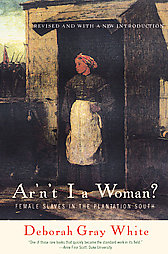
In the summer of 2007, the Journal of Women's History (19:2) published a roundtable on "The History of Women and Slavery: Considering the Impact of Ar'n't I a Woman? Female Slaves in the Plantation South on the Twentieth Anniversary of Its Publication."
According to the introduction by Jennifer L. Morgan, the roundtable was originally a series of papers presented in June 2005 at the 13th Berkshire Conference on the History of Women at Scripps College in Claremont, California. The 7 articles consider Deborah Gray White's landmark work, Ar'n't I A Woman: Female Slaves in the Plantation South (originally published in 1985) and the state of scholarship on women of color during the period of slavery, including strides made by enterprising women in the field. The article received the 2007 Letitia Woods Brown Article Prize from the Association of Black Women Historians.
~.~.~.~
Jennifer Morgan, "Introduction."
Daina Ramey Berry, "Teaching Ar'n't I a Woman?"
Stephanie M. H. Camp, "Ar'n't I a Woman? in the Vanguard of the History of Race and Sex in the United States."
Leslie M. Harris, "Ar'n't I a Woman?, Gender, and Slavery Studies."
Barbara Krauthamer, " Ar'n't I a Woman? Native Americans, Gender, and Slavery"
Jessica Millward, "More History Than Myth: African American Women's History Since the Publication of Ar'n't I a Woman?"
Deborah Gray White, "Afterword: A Response."
(No links because the articles aren't available online for free. The journal can be found online here at the Johns Hopkins University Press site, but for the articles you will need to frequent your local public or college/university library....)


